Cat Health · Skin Conditions
Cat Ringworm: Symptoms, Treatment, and Can Humans Catch It?
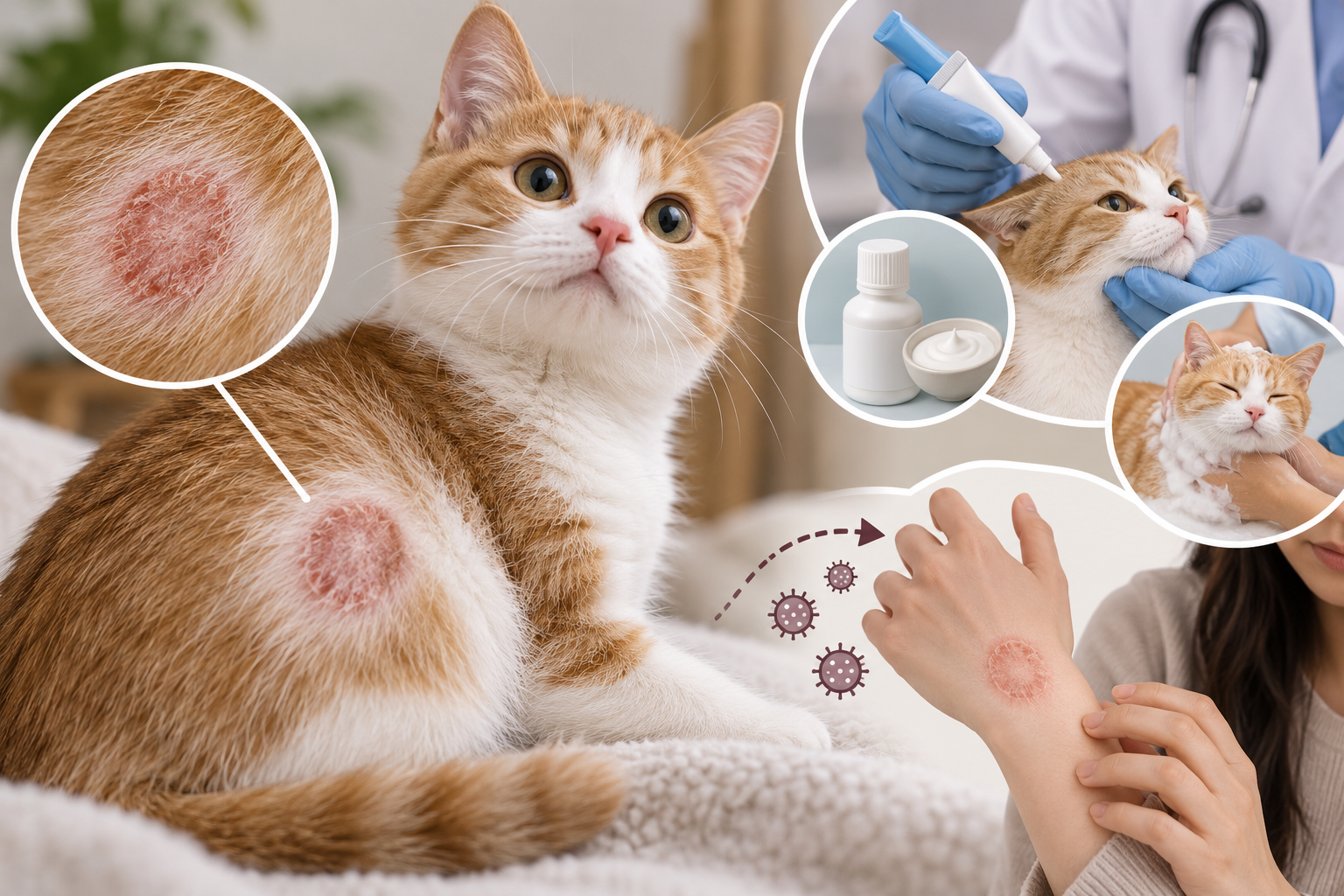
A round patch of hair loss, flaky skin, or crusting around a cat’s face, ears, or paws can make any owner worry about a skin problem. One condition veterinarians may consider is cat ringworm.
Despite its name, ringworm is not caused by a worm. It is a fungal skin infection. Kittens, long-haired cats, rescue cats, and cats living with other pets can need extra attention because exposure and spread are easier in those settings.
This guide covers early cat ringworm symptoms, whether people can catch it, how veterinarians diagnose it, how long treatment may take, and practical steps for cleaning the home.
Three Key Takeaways
01
It is a fungus
Ringworm is a dermatophyte infection, not a parasite.
02
It can spread
People and other pets can be exposed through contact and contaminated items.
03
Treat and clean
Veterinary treatment and environmental cleaning work together.
What Is Cat Ringworm?
Cat ringworm, also called dermatophytosis, is a fungal infection that can affect the skin, hair, and claws. Microsporum canis is a common cause in cats. Fungal spores can be carried on infected hairs and skin debris, then spread into the surrounding environment.
The name comes from the ring-shaped rash that can appear on human skin, but a cat does not always develop a neat circular lesion. Hair loss, scaling, crusts, and redness can resemble several other skin conditions, so visible signs alone cannot confirm ringworm.
Petggom Check
A round patch of hair loss is not always ringworm, and ringworm does not always look round. Confirming the cause matters before starting treatment.
Early Signs of Cat Ringworm
Early changes can look like a small bald spot or dandruff and may be easy to overlook. The face, ear tips, paws, and tail are common locations, but ringworm can appear anywhere on the body.
- Round or irregular patches of hair loss
- Broken, short, or rough-looking hairs
- Flaking, scaling, crusts, or redness
- Changes around the ears, face, or paws
- Inflammation around claws or claw changes
- Itching, excessive grooming, or scratching
Not every cat with ringworm is very itchy. Some cats show only hair loss and scaling. Flea allergy, bacterial skin disease, mites, and allergic skin disease can also look similar, which is why a veterinary examination is important.
Can Cat Ringworm Spread to People?
Yes. Ringworm can spread from cats to people. Exposure can happen through direct contact with an infected cat or by touching contaminated bedding, blankets, brushes, carriers, cat trees, or loose fur.
In people, ringworm may cause an itchy, red, scaly, or ring-shaped rash. Children, older adults, and people with weakened immune systems may need extra care around a suspected case.
If someone in the household develops a rash
The cat should be evaluated by a veterinarian, and the person should seek advice from a qualified medical professional. Treating the cat and assessing human symptoms are separate steps.
How Is Cat Ringworm Diagnosed?
Because cat ringworm can resemble other skin diseases, veterinarians usually combine the appearance of the lesions with diagnostic testing. They may also ask about the cat’s living environment and whether other pets have skin changes.
| Test | What It Can Help Show |
|---|---|
| Wood’s lamp examination | Some infected hairs may fluoresce, which can help identify suspicious areas. It is not a stand-alone confirmation test. |
| Microscopic examination | Hair and skin debris can be examined for fungal spores or changes consistent with infection. |
| Fungal culture | This can help identify the fungus, though results can take time. |
| PCR testing | Depending on the clinic, PCR may be used to detect fungal genetic material. |
The test results and the cat’s overall health help the veterinarian choose a treatment plan. A photo can be useful to document changes, but it cannot reliably distinguish ringworm from every other skin condition.
How Long Does Treatment Take?
Treatment depends on how extensive the lesions are, the cat’s age and health, coat type, and whether other pets live in the home. A veterinarian may use a combination of topical antifungal treatment, medicated shampoo or rinse, and oral antifungal medication.
Veterinary references describe many cases as needing at least six weeks of treatment and environmental management. Some cats need six to twelve weeks or longer. Skin can look better before spores are controlled, so follow the veterinarian’s treatment duration and recheck plan rather than stopping medication early.
During treatment, keep these points in mind
- Do not stop prescribed medication without veterinary guidance.
- Use shampoos, rinses, or topical products exactly as directed.
- Expect treatment to take longer in widespread cases or in some kittens and long-haired cats.
- Do not assume the infection is gone just because the skin looks improved.
What If You Have More Than One Cat?
In a multi-cat home, it is sensible to watch the other cats closely when one cat is suspected of having ringworm. Tell the veterinarian about shared spaces and contact history, even if the other cats do not yet have visible lesions.
- Keep the suspected or infected cat in a separate living area when your veterinarian recommends it.
- Use separate bowls, litter supplies, bedding, and grooming tools.
- Wash hands after handling the cat and remove loose fur from clothing.
- Book a veterinary visit if another pet develops hair loss, scaling, or crusts.
- Do not give every cat the same medication without individual veterinary advice.
Separation can be stressful, so give the cat a quiet space with food, water, a litter box, and a place to hide. The goal is to reduce contact and contamination while continuing normal, attentive care.
Cleaning and Disinfection to Reduce Reinfection
Treating the cat and managing the home go together. Infected hairs and skin debris can carry spores, so focus on the places where the cat spends the most time and repeat cleaning throughout treatment.
- Remove hair and dust first: Vacuum floors, furniture edges, cat trees, bedding areas, and other places where loose hair collects.
- Separate washable items: Launder blankets, bed covers, and towels separately, then dry them thoroughly.
- Clean grooming tools and carriers: Remove trapped hair, wash the item, and use a product appropriate for that surface according to its label.
- Disinfect hard surfaces carefully: Clean visible debris before disinfecting, then follow the product’s dilution, contact-time, and ventilation instructions.
- Consider replacing hard-to-clean items: Worn fabric toys or heavily contaminated scratchers may be difficult to clean thoroughly.
Safety note
Never mix cleaning products. Keep cats away from wet disinfected surfaces and allow them to dry completely. Follow the product label and your veterinarian’s advice before using any disinfectant around pets.
When Should You See a Veterinarian?
A single small patch of hair loss is not always an emergency, but it is worth arranging veterinary care promptly when any of the following apply.
- The hair-loss area is enlarging quickly or new areas are appearing.
- The skin is very red, oozing, painful, or may have a secondary infection.
- A kitten, senior cat, or cat with an existing health problem develops skin changes.
- Other cats or dogs live in the home.
- Someone in the household develops an itchy, round, or scaly rash.
- Similar signs return after a previous course of treatment.
If skin changes occur together with poor appetite, vomiting, or unusual lethargy, do not assume ringworm is the only issue. Those signs may need a separate veterinary assessment.
Frequently Asked Questions
Can people catch ringworm from cats?
Yes. Direct contact and contaminated objects can spread ringworm to people. Wash hands after handling the cat and keep bedding and grooming tools separate during treatment.
Can cat ringworm go away on its own?
Some healthy cats may improve over time, but waiting can allow ongoing spread to people, other animals, and the home environment. A veterinary diagnosis and treatment plan are the safer route when ringworm is suspected.
Are medicated baths always necessary?
A veterinarian may prescribe a medicated shampoo or rinse depending on the cat and the extent of infection. The product, frequency, and method should be individualized rather than copied from another cat’s treatment.
Does a negative Wood’s lamp test mean it is not ringworm?
No. A cat can have ringworm without visible fluorescence, and fluorescence does not confirm every case. Fungal culture, microscopy, or other testing may still be needed.
Can I still cuddle my cat during treatment?
Try to reduce close skin-to-fur contact while the infection is active, especially around children, older adults, or people with weakened immune systems. Follow your veterinarian’s advice and wash your hands after handling the cat.
Conclusion
Cat ringworm is often associated with round patches of hair loss, but its appearance can vary from cat to cat. The useful next step is not guessing from a photo. It is getting the skin problem checked, following a veterinary treatment plan, and cleaning the cat’s environment consistently.
Even when the skin seems better, complete the treatment and follow-up plan set by the veterinarian. That gives the household the best chance of reducing recurrence and spread.
Trusted Sources
- Merck Veterinary Manual: Ringworm (Dermatophytosis) in Cats
- Merck Veterinary Manual: Dermatophytosis in Dogs and Cats
- Cornell Feline Health Center: Ringworm
- CDC: Ringworm Information
- CDC: Cleaning and Disinfecting Pet Supplies
This article is for general education. A veterinarian should diagnose and treat an individual cat.