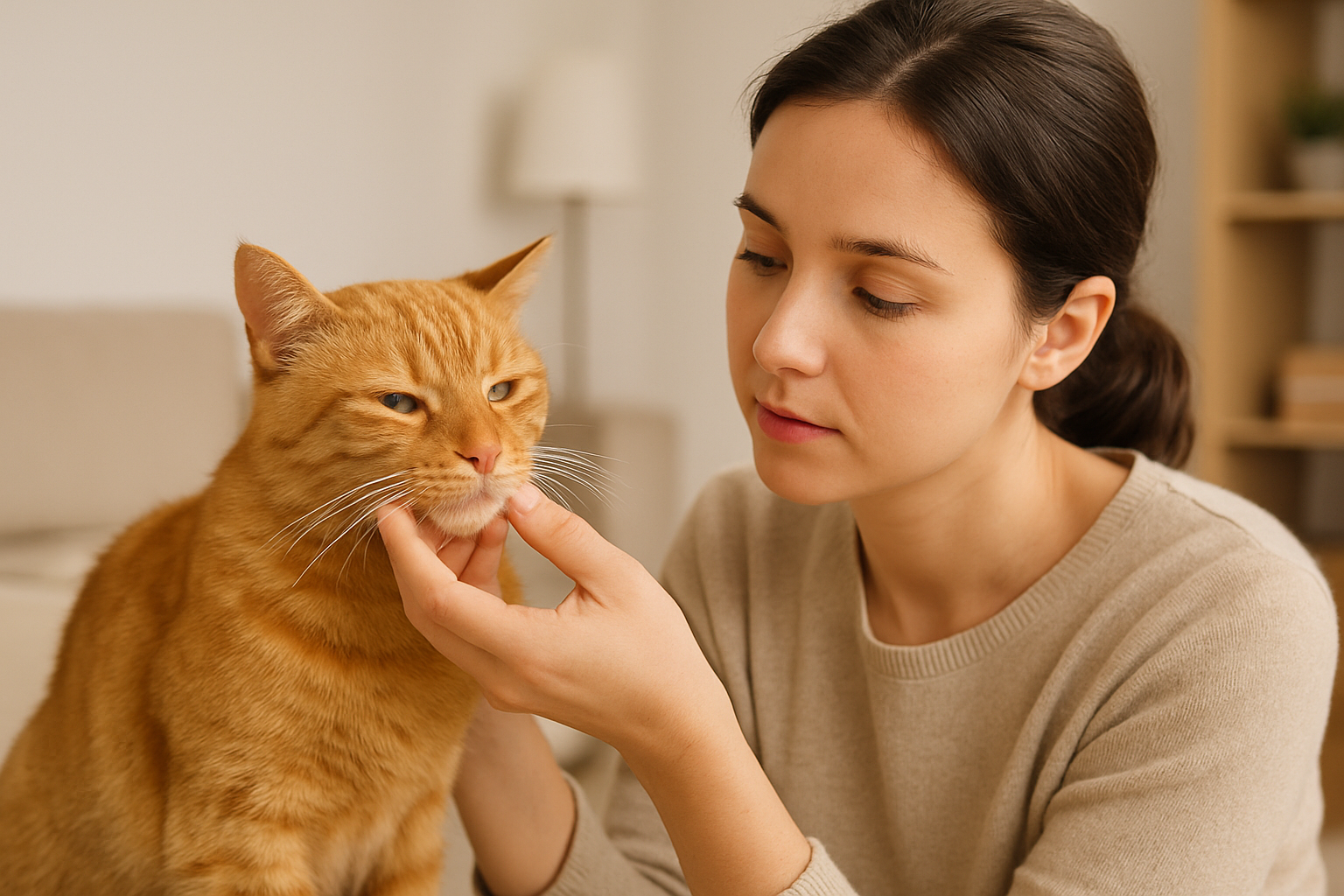
Black specks or scabs on your cat’s chin may be feline acne, often called cat chin acne. Similar skin changes can have other causes, though, so it’s safest to monitor the area and consult a veterinarian if needed rather than squeezing the spots or applying products on your own.
✅ 3 key takeaways
search
Look for black specks or scabs
You may notice black, grain-like debris, redness, scabs, or swelling around the chin and lower lip.
warning
Don’t squeeze the spots or use human products
Squeezing or applying medicated products without veterinary guidance may irritate the skin or worsen infection.
vet
Seek veterinary advice if it hurts or gets worse
Contact a veterinarian if there is swelling, discharge, bleeding, pain, or if the changes persist or worsen.
What is cat chin acne, and what causes it?
Cat chin acne is a skin problem involving changes in the hair follicles and oil glands around the chin. It can appear as blackheads or inflammation. Mild cases may look like tiny black specks; more severe cases may involve redness, scabs, swelling, or pain.
There is no single confirmed cause. Skin cells and oil, the condition of the skin and coat, grooming, and environmental factors may all play a role. Plastic bowls cannot be identified as the cause in every case, but washing food and water bowls often and keeping them clean may help. Not every black spot on a cat’s chin is acne, so don’t try to identify the cause by appearance alone.
Early changes to look for
At first, you may see pepper-like black specks around the chin or lower lip, or small bits of debris that seem to cling to the fur. The skin may become red, the fur may thin in patches, or scabs and small bumps may develop.
More severe inflammation can cause chin swelling or discomfort when touched, as well as discharge or bleeding. Other skin conditions and infections can cause similar changes. If the affected area spreads or your cat seems to be in pain, don’t try to determine the cause at home—arrange a veterinary examination.
What to record at home—and what to avoid
Note when you first noticed the problem, where it is, its size, any changes in redness, scabs, or discharge, and how your cat reacts when the area is touched. Photos taken from the same angle and in similar lighting can make changes over time easier to compare. Also record the type of bowls you use, how they are cleaned, and any recently changed products or surroundings.
Don’t scratch or squeeze black spots or scabs with your fingernails. This can injure the skin and worsen inflammation. Don’t apply alcohol, hydrogen peroxide, human acne products, or ointments without veterinary advice, and don’t reuse leftover pet medication. A veterinarian can advise on appropriate products, taking into account the possibility that your cat may lick the area.
What may happen at the veterinary clinic?
The veterinarian will examine the location and appearance of the affected area, how long it has been present, and whether there is itching or pain. Depending on the findings, they may examine cells or material from the skin’s surface, or recommend tests to check for other causes. The tests and treatment plan will depend on the skin changes and your cat’s overall health.
Bring photos, your notes, and a list of products you have used to help with the consultation. If your cat also has general signs such as difficulty breathing or marked lethargy, or if the chin is swelling rapidly and discharging fluid, contact a veterinary clinic without delay.
Managing the condition and reducing flare-ups
Keep the chin clean, and gently wipe away food or water if it gets on the area. Choosing bowls that are easy to wash and cleaning them daily are practical steps. Scrubbing the skin hard or disinfecting it frequently may irritate it instead.
If the problem keeps returning or does not improve, consult a veterinarian about possible contributing factors and suitable care rather than relying on home measures alone. If treatment has been prescribed, follow the instructions and keep track of improvement and any new changes to share at the next appointment.
Frequently asked questions
Q. Are all black spots on a cat’s chin acne?
A. No. Black spots or scabs can occur with chin acne, but other skin problems can look similar. Have your cat examined if the affected area spreads or there is inflammation or pain.
Q. Can I squeeze my cat’s chin acne at home?
A. It’s best not to squeeze or scratch it. This can damage the skin and worsen inflammation. Ask a veterinarian about appropriate care or treatment.
Q. Can I apply human acne cream?
A. Don’t apply it without veterinary advice. Your cat may lick the product, and products made for people may irritate the skin. Ask a veterinarian which products and treatments are suitable.
Q. When should I take my cat to the vet?
A. Arrange a veterinary visit if there is swelling, discharge, bleeding, pain, or if the affected area spreads, persists, or worsens. Also seek advice if your cat strongly resists having its chin touched or develops other unusual signs.
Sources
Black spots on the chin alone are not enough to identify the cause. Keep a record of changes and avoid irritating treatments. If the problem worsens or your cat seems uncomfortable, ask a veterinarian to examine it.
This article provides general information for pet caregivers and does not replace veterinary diagnosis or treatment. Consult a veterinarian when symptoms appear.