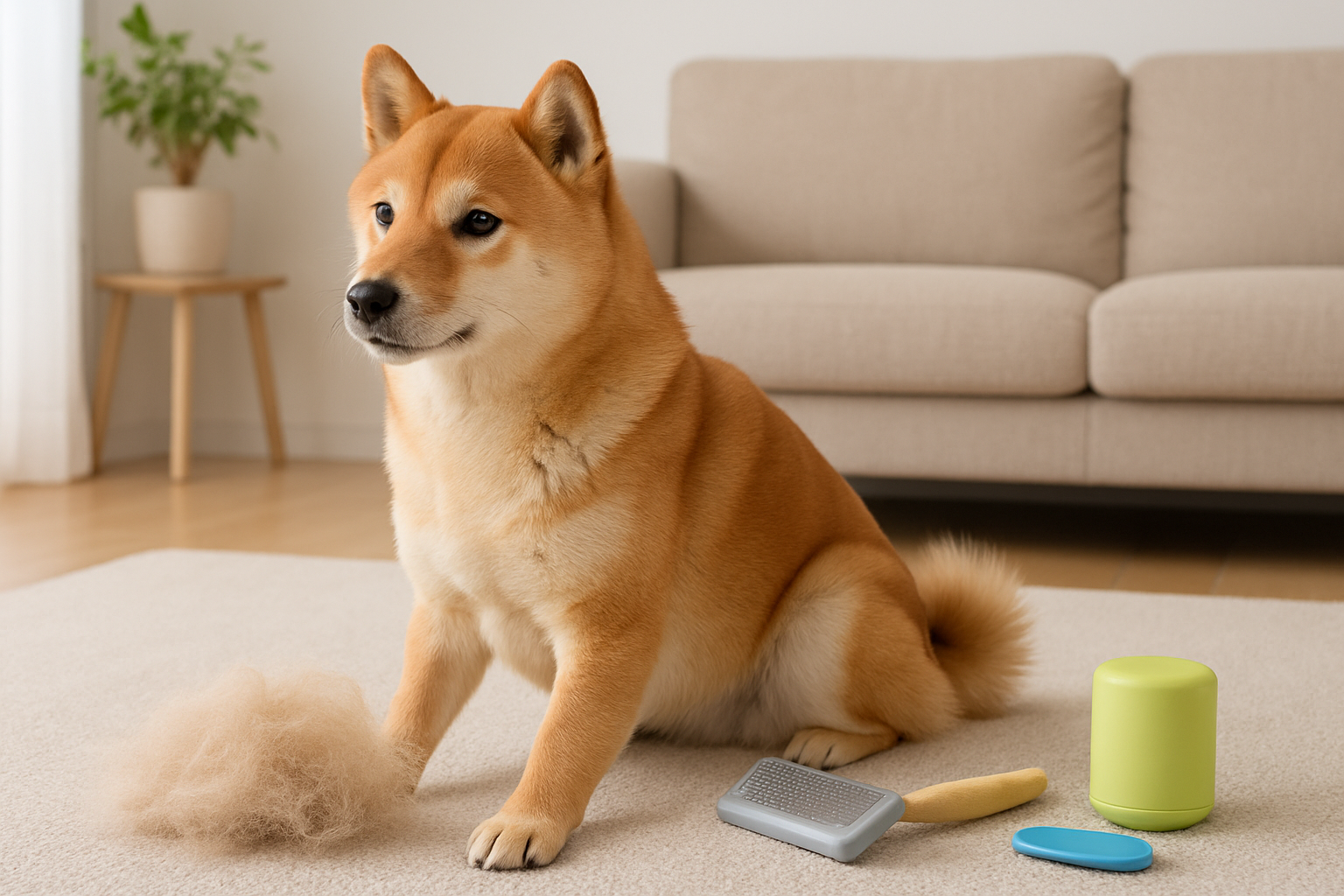
Jindo dogs have a double coat and may shed heavily as the seasons change. However, sudden or worsening hair loss—especially when accompanied by skin changes or itching—should not automatically be dismissed as normal shedding. The cause may need to be checked.
✅ 3 key takeaways
🐕
Tell shedding from hair loss
Check whether the coat is thinning evenly and the skin looks healthy, or whether there are bald patches or skin symptoms.
📝
Keep a record of changes
Photos and notes on when the shedding began, where it is occurring, and any itching or redness can help your veterinarian.
🏥
Seek veterinary advice if needed
Contact a veterinary clinic if hair loss persists or worsens, or if sores or changes in your dog’s general condition appear.
What Jindo Dog Hair Loss Can Mean and Common Causes
Dogs with double coats, including Jindos, may lose a substantial amount of undercoat as the seasons change. If shedding is fairly even across the body and there are no sores or signs of inflammation, it may be normal seasonal shedding. The timing and amount can vary depending on the individual dog and its living environment.
Skin irritation, parasites, infections, allergic reactions, and hormonal or nutritional issues can also cause hair loss. It can be difficult to identify the cause just by looking at the coat, so avoid assuming that a particular disease is responsible.
Changes to Watch for Early On
Note whether the hair loss is limited to one area, appears on both sides of the body, or leaves patches of exposed skin. Also check for redness, scaling, scabs, discharge, odor, or repeated scratching and licking.
Contact a veterinary clinic if the shedding increases suddenly, continues to spread, or is accompanied by sores or discharge. If your dog also shows changes such as reduced appetite or low energy, it is best not to delay veterinary care.
What to Record at Home and What to Avoid
Write down when you first noticed the hair loss, how it has changed, and take photos of affected areas. Notes on itching or licking, recent bathing or grooming, changes to food or treats, walking environments, and parasite prevention can also help your veterinarian understand the course of the problem.
Do not rub the skin roughly or pick off scabs, and do not apply human medication or ointments obtained without veterinary guidance. Frequent bathing or trying new skin products before the cause is known may also irritate the skin. Before having a double coat clipped very short, consult a veterinarian or an experienced groomer.
What to Expect at a Veterinary Visit and During Testing
Your veterinarian will ask when the hair loss began and how it has progressed, whether your dog is itchy, and about its living environment and preventive care. They will also examine the skin and coat. Depending on the symptoms and examination findings, they may consider tests such as skin surface examinations, hair or skin sample tests, parasite checks, or blood tests.
Bring photos and notes from home, along with information about any recently changed foods, treats, or products. Testing and treatment depend on the cause, so it is safer not to choose a medication or dose based on hair loss alone.
Care to Help Prevent Recurrence or Worsening
Check your dog’s coat and skin regularly, and brush consistently in a way that suits its coat type and condition. Bathe and groom your dog appropriately to avoid irritating the skin. It is best to discuss parasite prevention or dietary changes with your veterinarian.
Keep tracking changes so you can tell whether the symptoms are improving. If hair loss worsens again or new skin symptoms develop, consult your veterinarian and bring your previous visit information and records.
How to Decide When to Seek Veterinary Care
If the skin looks healthy and shedding is even and seasonal, you can monitor the changes and provide routine care. However, contact a veterinary clinic if bald areas are growing, the coat thins noticeably over a short period, or itching, skin inflammation, or sores occur.
Seek veterinary care promptly if your dog’s condition worsens quickly or it shows changes throughout the body, such as unusual lethargy or not eating. Online information alone cannot determine whether the cause is normal shedding or a medical condition.
Frequently asked questions
Q. Do Jindo dogs normally shed a lot?
A. Jindo dogs have a double coat, so seasonal shedding can be pronounced. The amount and timing vary from dog to dog. If the skin becomes exposed or itching or inflammation occurs, veterinary advice may be needed.
Q. If my dog is losing hair but the skin looks fine, can I skip the vet?
A. If the hair is thinning evenly, the skin appears normal, and your dog otherwise seems well, you can monitor the changes and keep a record. Contact a veterinary clinic if the hair loss persists, spreads, or other symptoms develop.
Q. Can I clip my dog’s coat short to reduce shedding?
A. Clipping a double coat short cannot be assumed to resolve shedding or skin problems. Before clipping, discuss your dog’s skin and coat condition with a veterinarian or an experienced groomer.
Q. Can I use human ointment or shampoo on my dog?
A. Products made for people may irritate dogs or may not be suitable for them. Do not use them without guidance. If your dog has skin symptoms, ask your veterinarian about appropriate products and care.
Sources
Hair loss can have many causes, from normal seasonal shedding to skin problems that need veterinary attention. Keep track of changes in the coat and skin, and have your dog assessed by a veterinarian if symptoms worsen or other signs appear.
This article provides general information for pet caregivers and does not replace veterinary diagnosis or treatment. Consult a veterinarian when symptoms appear.