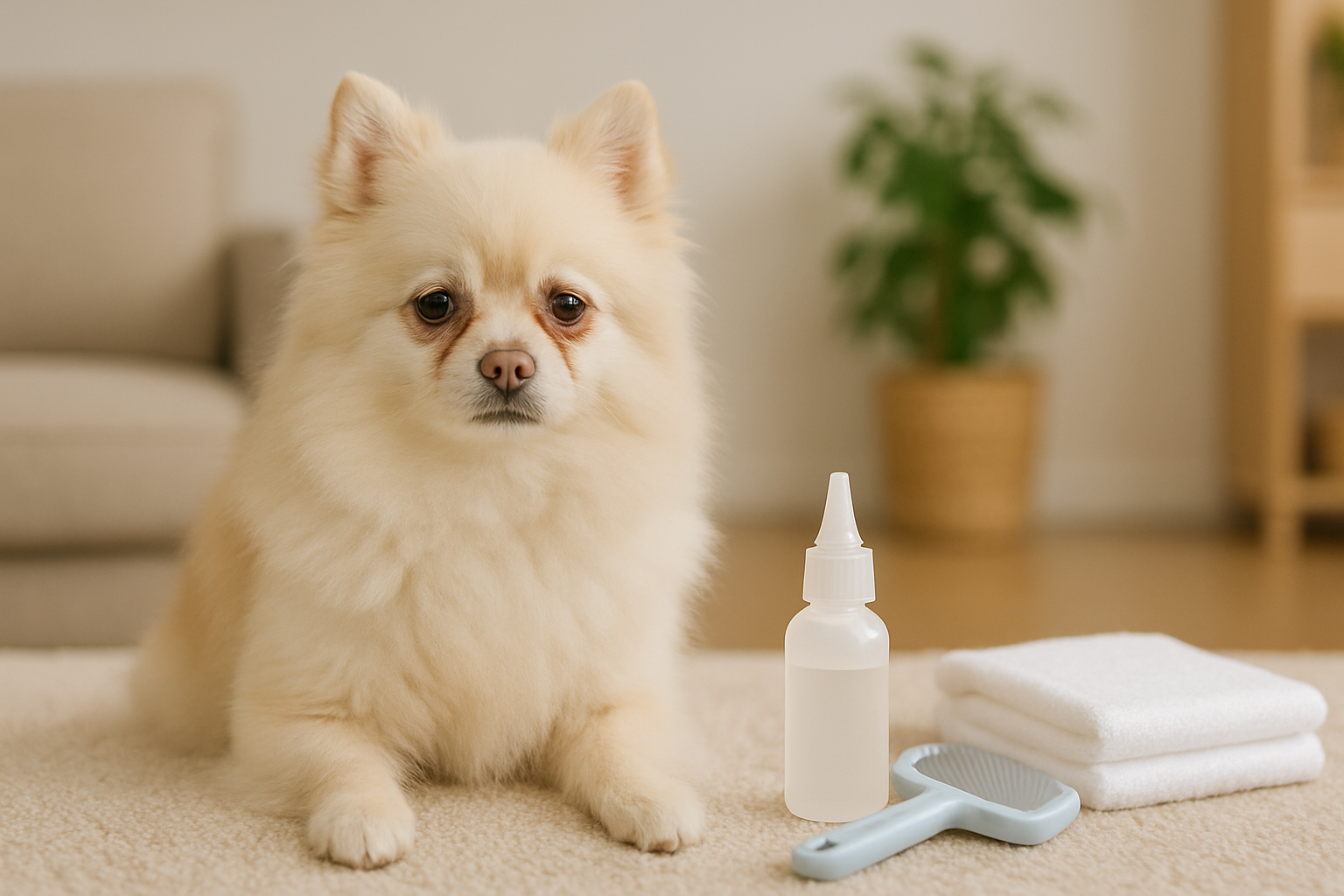
Red or brown fur beneath a Pomeranian’s eyes does not necessarily mean the cause is simply excess tears. Look at the pattern of staining along with signs of eye discomfort, discharge, and when the change began. If it keeps coming back or occurs with other symptoms, have your dog checked by a veterinarian.
✅ 3 key takeaways
🔎
Tear stains can be a sign of an underlying issue
Excess tearing can have many causes, including irritation or the structure around the eyes. Fur color alone cannot identify the cause.
👁️
Watch for signs of eye pain
Squinting or keeping an eye closed, redness, cloudiness, or sudden discharge may call for prompt veterinary care.
📝
Keep a record and clean gently
Note when the staining started and whether it affects one or both eyes. Keep the fur around the eyes clean and dry, and avoid products that could irritate the eyes.
What Pomeranian Tear Stains Can Mean and Common Causes
Reddish or brown discoloration of the fur beneath the eyes is commonly called tear staining. Pigments in tears may leave a stain on the fur, but tear stains alone cannot diagnose a specific disease or infection.
Increased tearing can have several possible causes, including irritation from nearby hair or debris, eyelid or eyelash problems, an issue with tear drainage, or irritation or inflammation of the eye’s surface. Do not assume the cause is related to the Pomeranian breed alone; consider what has changed from your dog’s usual condition.
Changes to Watch for Early
Check whether the staining is on one side or both, and whether it appeared suddenly or gradually became darker. You can also note whether the fur is constantly wet, whether discharge is clear or sticky, yellow, or greenish, and whether there is an odor or skin irritation.
Do not treat frequent rubbing or pawing at the eyes, squinting or keeping an eye closed, or eyes that look red or cloudy as merely a cosmetic issue. If the change is sudden or there are signs that your dog may be in pain, contact a veterinary clinic without delay.
What to Record at Home and What to Avoid
To help with a veterinary visit, write down when you first noticed the change, whether one or both eyes are affected, the color and amount of discharge, and any changes in your dog’s behavior. If possible, take front and side photos of the area to track changes. Also note any recent changes in grooming or cleaning products, or in your dog’s environment.
Gently wipe around the eyes with clean gauze or a soft cloth dampened with lukewarm water, and avoid leaving the fur or skin wet. Do not rub the eyeball or pull at the fur. Do not use scissors close to the eyes; ask a groomer or veterinary clinic about safe trimming if needed.
Do not use hydrogen peroxide, human eye drops, leftover antibiotics or prescription medication, or tear-stain removers on your own. These may irritate the eye or delay veterinary care. It is also safer to consult a veterinarian before changing your dog’s diet or starting supplements, rather than doing so before the cause is known.
What to Expect at a Veterinary Visit and During Testing
A veterinarian may examine the area around the eyes, the eyelids, eyelashes, and the eye surface, and assess tear production or tear drainage. Depending on the symptoms, they may choose tests such as a tear production test, a fluorescein stain test, or an assessment of the tear ducts. Not every dog needs every test or procedure.
Seek prompt veterinary care if your dog keeps an eye closed or squints severely, develops sudden redness or cloudiness, has changes after an eye injury, appears to be in significant pain, or has a sudden increase in discharge. Even if the only visible change is fur discoloration, arrange a visit to investigate the cause if it persists or worsens.
How to Help Prevent Recurrence or Worsening
Check regularly that the fur around the eyes is not poking into them. After cleaning your dog’s face, gently dry the fur and skin. When tidying the fur near the eyes, it is safest to get help from a professional to avoid injury.
If tear stains keep returning, do not rely on grooming alone. Show your veterinarian your notes and photos. The appropriate care can vary depending on the cause, and the return of tear stains by itself does not necessarily mean treatment has failed or that a particular disease is present.
Frequently asked questions
Q. Are tear stains in Pomeranians just a common cosmetic issue?
A. Fur discoloration alone does not reveal the cause. Pigments in tears may stain the fur, but it is also important to consider why your dog is tearing more than usual. Seek veterinary care if there are other signs, such as redness or apparent eye pain.
Q. Is it okay to wipe away tear stains every day?
A. You can gently clean the fur around the eyes, but take care not to rub the eyes or irritate the skin. Use clean gauze or a soft cloth dampened with lukewarm water, and dry the fur afterward. Do not put products in the eyes or use harsh cleansers.
Q. Can I use a tear-stain remover or human eye drops?
A. It is safest not to use tear-stain removers or human eye drops unless a veterinarian has advised you to do so. Ingredients may irritate the eyes or delay appropriate care. Do not use prescription medication on your own, including medication prescribed for another pet or left over from a previous treatment.
Q. When should I take my dog to a veterinarian right away?
A. Seek prompt care if your dog keeps an eye closed or squints severely, develops sudden redness or cloudiness, shows changes after an eye injury, behaves as if in pain, or has a sudden increase in discharge. Contact a veterinarian if symptoms persist or worsen, even if they seem mild.
Sources
Tear stains may be a visible change rather than the underlying cause. Check first for signs of eye discomfort. If the staining recurs or worsens suddenly, bring your notes and photos to a veterinary visit.
This article provides general information for pet caregivers and does not replace veterinary diagnosis or treatment. Consult a veterinarian when symptoms appear.