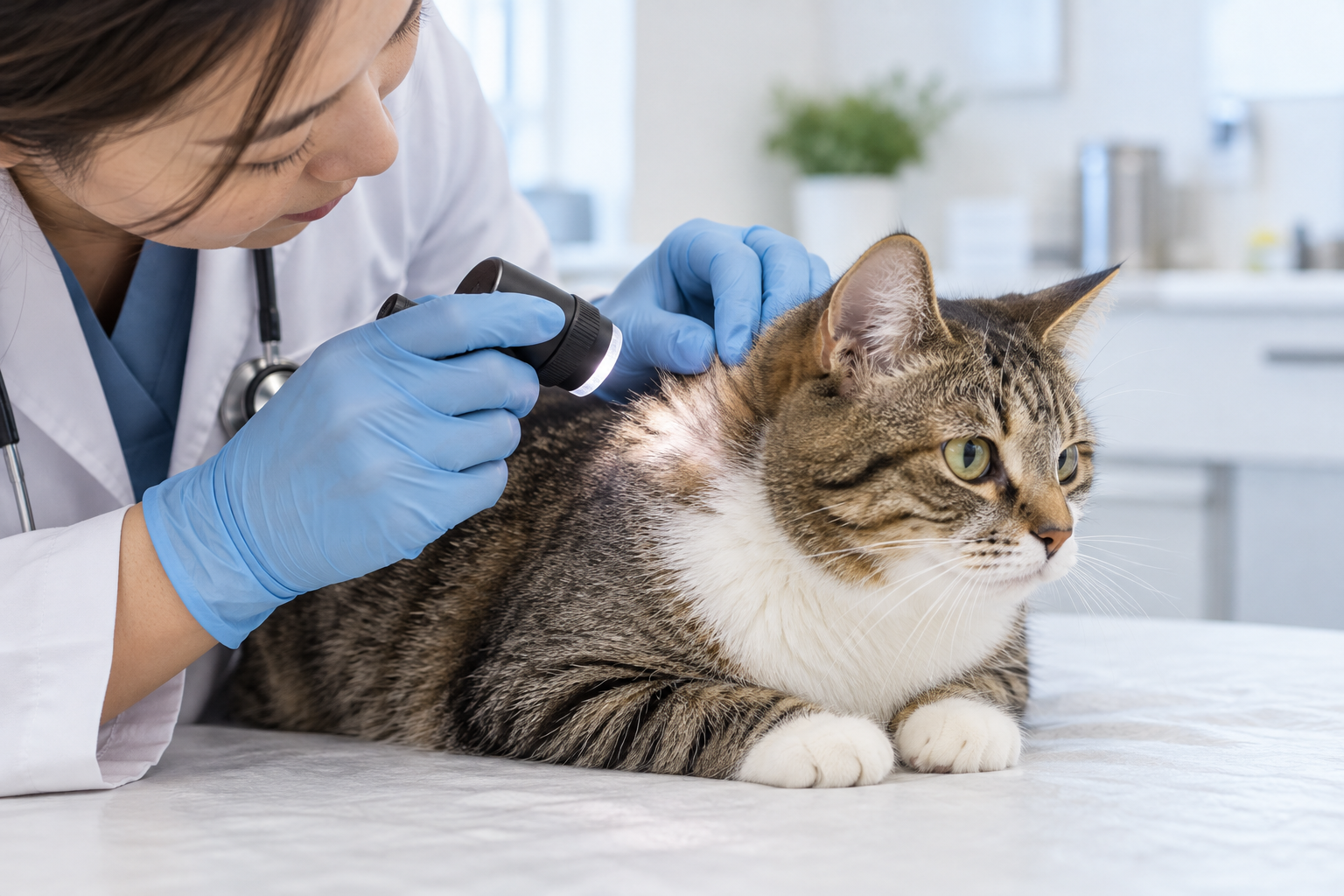
A patch of hair loss can make cat owners worry about ringworm, but appearance alone cannot confirm the cause. Ringworm is a fungal infection that can spread to people and other animals, so a veterinary check is the safest first step when it is suspected.
✅ 3 key takeaways
🔎
Looks are not a diagnosis
Hair loss and scaling can have causes other than ringworm; a vet may recommend testing.
🧼
People can catch it
Limit close contact while you seek advice, and wash hands after handling your cat or its belongings.
🐾
Treat the cat and the environment
Follow your veterinarian’s treatment plan and ask how to clean safely.
Possible signs of ringworm in cats
Ringworm is a fungal infection affecting the skin and hair. Possible signs include round or irregular areas of hair loss, broken hairs, flaky skin, crusts, or redness. It may or may not be itchy, and some cats can carry the infection without obvious skin changes.
Other skin conditions can look similar. Do not assume that a circular bald patch proves ringworm, and do not apply human creams unless a veterinarian specifically advises you to.
How it spreads and what to do at home
Ringworm can spread through contact with an infected animal or with contaminated hairs and skin flakes on items such as bedding, brushes, or furniture. People can also become infected. Wash your hands after contact, and take extra care around children or household members with weakened immune systems.
- Until you have veterinary guidance, reduce close contact with other pets.
- Remove loose hair and dust regularly, and clean or launder commonly used items according to their care instructions.
- Do not mix cleaning products or apply disinfectants to your cat. Ask your veterinarian which cleaning approach is suitable for your home and pet.
Veterinary diagnosis and treatment
A veterinarian may examine the skin and hair and, when appropriate, use tests such as a Wood’s lamp examination, microscopy, or fungal culture. No single method is right for every case, and further testing may be needed.
Treatment depends on the extent of the infection and the cat’s situation. A veterinarian may recommend topical treatment, oral medication, or a combination. Use only products directed for your cat, follow the instructions, and check with the veterinarian before stopping treatment—even if the skin looks better.
When to contact a veterinarian
Contact a veterinary clinic if your cat develops new areas of hair loss or scaling, or if another pet or person in the household develops a similar skin change. Seek advice promptly if the affected area is spreading or your cat seems very uncomfortable. If you develop a ring-shaped rash, tell a healthcare professional that your cat may have ringworm.
Frequently asked questions
Q. Can cats give ringworm to people?
A. Yes, transmission from animals to people can occur. Wash your hands after handling your cat or its belongings, limit close contact while you seek advice, and contact a healthcare professional if you develop a rash.
Q. Does a round bald spot mean my cat has ringworm?
A. Not necessarily. Several skin problems can look alike, so a veterinarian should assess the cat and decide whether tests are needed.
Q. Can cleaning the house cure ringworm in my cat?
A. Cleaning can help remove contaminated hairs and debris, but it does not replace veterinary assessment and treatment for the cat. Ask your veterinarian for a cleaning plan suitable for your household.
Q. Can I stop treatment once the skin looks normal?
A. Not without checking with your veterinarian. Visible improvement does not always establish that the infection has cleared, and the recommended course can vary.
Sources
Because ringworm can resemble other skin conditions, treat this guide as general information rather than a diagnosis. If you suspect it, contact a veterinarian; if a person in your household develops a rash, seek advice from a healthcare professional.
This article provides general information for pet caregivers and does not replace veterinary diagnosis or treatment. Consult a veterinarian when symptoms appear.