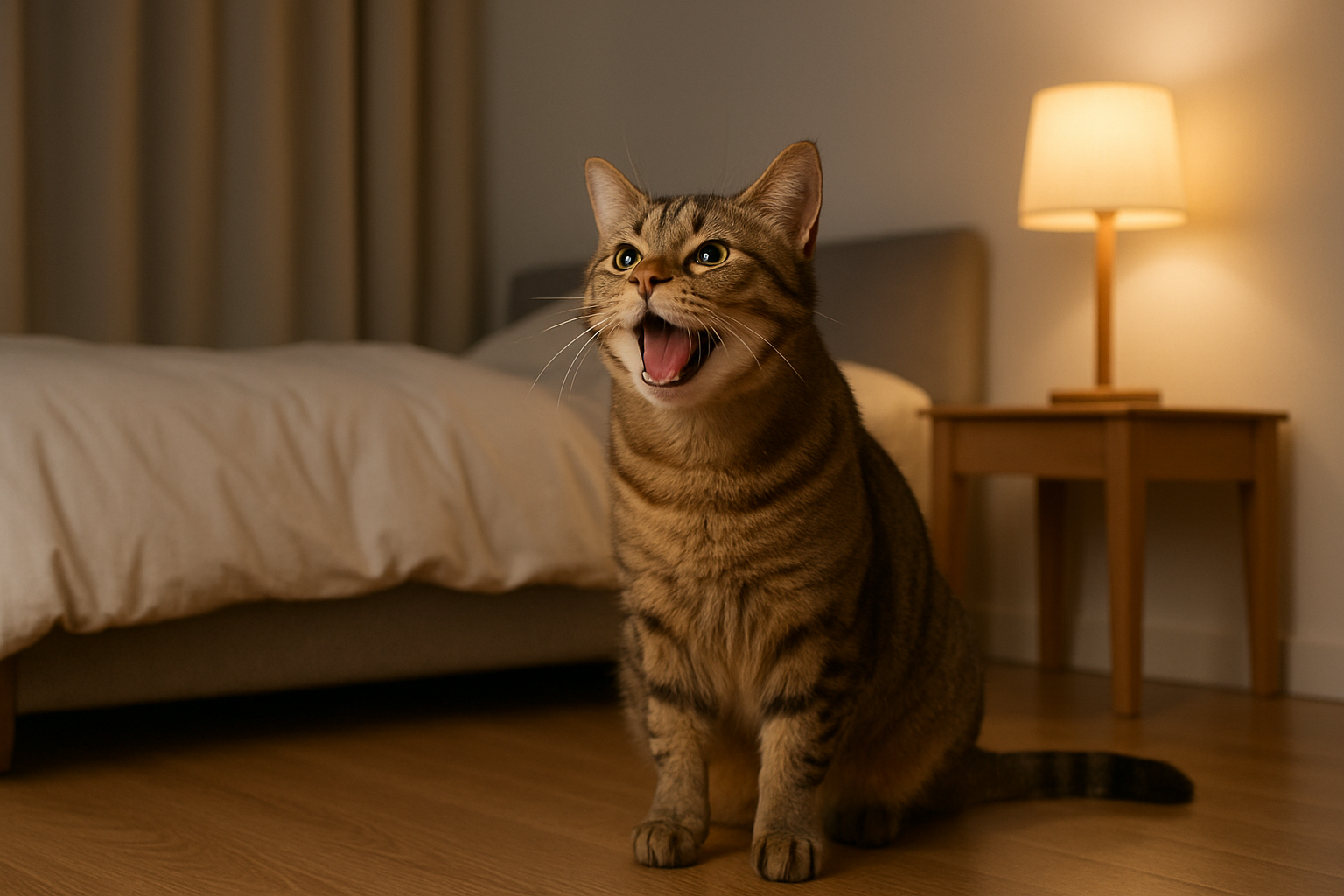
A cat meowing at night does not always mean something is wrong. Your cat may want attention or food, or may be reacting to a change in the environment. If the behavior starts suddenly or comes with other changes, however, it is worth checking your cat’s health.
✅ 3 key takeaways
🔎
There can be many reasons
Possible causes range from seeking attention or food to stress and changes in the living environment.
🩺
Check sudden changes
If unusual meowing begins suddenly or comes with changes in appetite, litter-box habits, or activity, consult a veterinarian.
🌙
Review daily routines
Daytime play, a consistent evening routine, and a comfortable resting place may help you understand and manage nighttime behavior.
Why Cats Meow at Night: What It May Mean and Common Situations
Cats may have different activity patterns from people, and some become more active at dusk or in the early morning. Nighttime meowing may be a way to ask you for something or respond to what is happening around them, but the sound alone cannot tell you exactly why your cat is meowing.
- Seeking attention or interaction: Your cat may approach and meow, then repeat the behavior after getting a response.
- Needing food, water, or litter-box access: Check whether the food bowl is empty or the litter box is uncomfortable to use.
- Responding to a change in the environment: A move, a new family member or pet, or rearranged furniture can make a cat feel unsettled or cautious.
- Related to reproductive behavior: Cats that have not been spayed or neutered may yowl in connection with mating behavior. Ask a veterinarian whether this may apply to your cat.
- Signaling discomfort or a health concern: Pain or a change in how your cat feels can affect behavior. Meowing alone cannot identify a particular condition.
What May Be Normal and What Changes to Check
Each cat has its own usual meowing frequency and schedule, so occasional nighttime meowing does not automatically mean something is wrong. The key is whether your cat’s behavior has changed from its usual pattern.
Notice whether the meowing has suddenly become more frequent or prolonged, or whether its sound or the circumstances have changed. Changes in eating or drinking, litter-box habits, movement, hiding, or reactions to touch can also be useful to report when seeking advice. If an older cat newly begins meowing at night, it is better to check on its health than to assume it is simply a habit.
Adjusting the Environment and Daily Routine
First, check that your cat’s basic needs are met, including food, water, a litter box, and a place to sleep. Make sure the litter box is clean and easy to reach, and that the resting area is quiet and safe.
- Play with your cat during the day and evening in ways it enjoys, then help it settle down and rest.
- Keep meal and play times as consistent as possible. Food puzzles may be useful when suited to your cat’s preferences and meal portions.
- Check for nighttime stimuli, such as animals outside the window or sudden noises, and adjust the resting area if needed.
- Do not automatically scold or startle your cat whenever it meows. First check whether it needs something. If it is seeking attention, try providing plenty of play and interaction during the day.
If the meowing continues or worsens despite changes to the routine, do not assume it is simply a behavior problem; consult a veterinarian.
When to Seek Professional Advice
Consult a veterinarian if unusual meowing starts suddenly or keeps recurring. In particular, if it occurs along with other signs such as reduced appetite, vomiting, changes in bowel movements or urination, reduced movement, hiding, or increased sensitivity, contact a veterinary clinic promptly to ask whether an examination is needed.
If your cat repeatedly strains to urinate but little or no urine comes out, contact an animal hospital immediately for guidance. This is a precaution; the cause cannot be diagnosed here.
If a health concern has been ruled out but nighttime meowing is still significantly affecting daily life, you can ask your veterinarian about behavioral advice. Do not punish your cat or give it medication on your own.
What to Record
Make a brief note of when the meowing happens, how long it lasts, where it occurs, and what happened just beforehand. It can also help to record how you responded and the condition of the food, water, and litter box so you can look for recurring patterns.
Keep track of changes in food intake, water consumption, bowel movements and urination, and activity. If possible, take a short video of the meowing to show during a consultation. Do not disturb your cat to record it or delay needed veterinary care.
Do Not Assume the Cause from Meowing Alone
Nighttime meowing may be related to attention-seeking or an environmental change, but behavior alone cannot determine whether a cat is in pain or has a health problem. Likewise, a cat that meows at night does not necessarily have a health issue. Consider changes from its usual behavior, any accompanying signs, and its living environment, and seek a professional assessment when needed.
Frequently asked questions
Q. Does a cat that meows at night always feel sick?
A. No. There may be many reasons, such as wanting attention or food or responding to a change in the environment. If the meowing starts suddenly or comes with other changes in behavior or health, consult a veterinarian.
Q. Should I respond every time my cat meows at night?
A. First check whether your cat needs food, water, access to the litter box, or a safe environment. Even if nothing seems wrong, do not scold or startle your cat. Try to provide daytime play and a consistent routine. If the meowing continues, professional advice may be helpful.
Q. My older cat has started meowing at night. What should I do?
A. Age alone cannot explain the cause, but a newly appearing behavior change is a reason to check your cat’s health. Record any other changes and consult a veterinarian.
Q. Will spaying or neutering stop nighttime meowing?
A. Spaying or neutering may affect meowing related to reproductive behavior, but nighttime meowing does not always have the same cause. Discuss the right choice and timing for your cat with a veterinarian.
Sources
Nighttime meowing can have different causes and contexts for each cat. Calmly observe what has changed from your cat’s usual behavior, and consult a veterinarian if the change is sudden or comes with other signs.
This article provides general information for pet caregivers and does not replace veterinary diagnosis or treatment. Consult a veterinarian when symptoms appear.