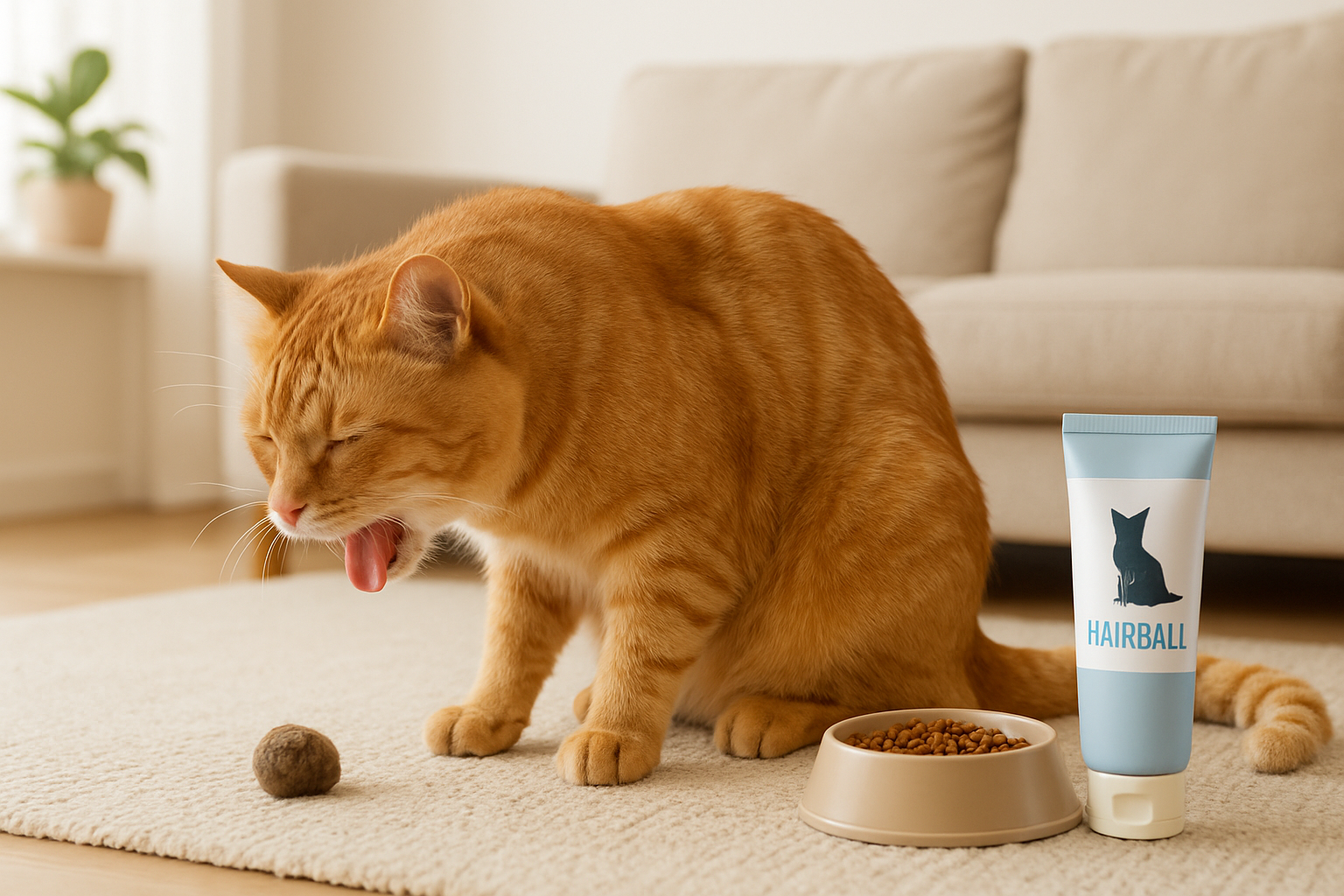
Cats often swallow hair while grooming, but frequent hairball vomiting or vomiting accompanied by other unusual signs should not be dismissed as a simple hairball. Learn how hairballs form, what to monitor at home, and when to contact a veterinarian.
✅ 3 key takeaways
🧶
What a hairball is
A clump of hair swallowed during grooming that gathers in the stomach and may be vomited up.
🪮
Everyday care
Brush your cat regularly to remove loose hair, and keep track of when and how often vomiting occurs.
🐾
Changes to watch for
Contact a veterinarian if unusual signs appear, such as repeated vomiting or reduced appetite.
What is a hairball?
Cats swallow hair as they lick and groom themselves. Some of that hair passes through the digestive tract, but hair that collects in the stomach can form a clump and be brought up by vomiting. This clump is commonly called a hairball.
A cat may bring up stomach fluid or food along with the hair. However, gagging or coughing-like behavior alone is not enough to determine the cause.
What should you check first?
After your cat brings up a hairball, check whether they are eating and moving around as usual. Note when the problem began, how often it happens, whether any hair actually came up, and whether there have been changes in appetite or bowel movements. These details can help when discussing the situation with a veterinarian.
If your cat repeatedly retches without bringing anything up, or continues to make coughing-like movements, do not assume it is a hairball. Describe what you have observed to your veterinarian.
Everyday ways to help
Regular brushing can remove loose hair and may reduce how much your cat swallows while grooming. Take your cat’s coat length and reaction to brushing into account, and use a gentle approach that does not cause distress.
Make sure your cat has a comfortable place to drink water, and avoid suddenly changing their usual food or treats. If you are considering food or products marketed for hairball care, first consult a veterinarian, taking your cat’s health and current diet into account.
Changes that deserve attention
Keep a close eye on your cat if they vomit hairballs repeatedly, vomit more often than usual, have a reduced appetite, or seem low on energy. Also note any changes in the amount or pattern of their bowel movements.
Not every symptom that occurs after a cat brings up hair is necessarily caused by a hairball. If signs continue or anything seems unusual for your cat, consult a veterinarian so the cause can be assessed.
When should you contact a veterinarian?
Contact a veterinary clinic if vomiting keeps happening, your cat continues to retch without bringing up hair, or they cannot keep food or water down. A veterinary visit may also be needed if other signs occur, such as reduced appetite, lethargy, or changes in bowel movements.
If your cat becomes severely subdued or their condition worsens quickly, contact a veterinary clinic without delay. Do not rely on online information to determine the cause or attempt treatment on your own.
Frequently asked questions
Q. Is it okay if my cat brings up a hairball occasionally?
A. Hair swallowed during grooming can be vomited up, but repeated vomiting should not automatically be considered normal. Keep track of how often it happens and any accompanying signs, and consult a veterinarian if you notice changes that concern you.
Q. How can I tell a hairball episode from a cough?
A. Gagging and coughing can look similar to an observer, and the cause may not be clear from the behavior alone. Recording a video of repeated episodes and showing it to your veterinarian may help with assessment.
Q. Will frequent brushing prevent hairballs?
A. Brushing can remove loose hair and may reduce the amount your cat swallows, but it cannot guarantee that hairballs will be prevented completely. Brush gently in a way that suits your cat’s coat and skin.
Q. Can I give my cat a hairball product right away?
A. Products can differ in ingredients and directions, and a cat’s health needs can vary. Consult a veterinarian before using a product, and do not give your cat human medication or treatments chosen on your own.
Sources
Hairballs are related to hair swallowed during grooming, but repeated vomiting or other changes should not automatically be blamed on hairballs. Keep a record of what you observe and consult a veterinarian when needed.
This article provides general information for pet caregivers and does not replace veterinary diagnosis or treatment. Consult a veterinarian when symptoms appear.