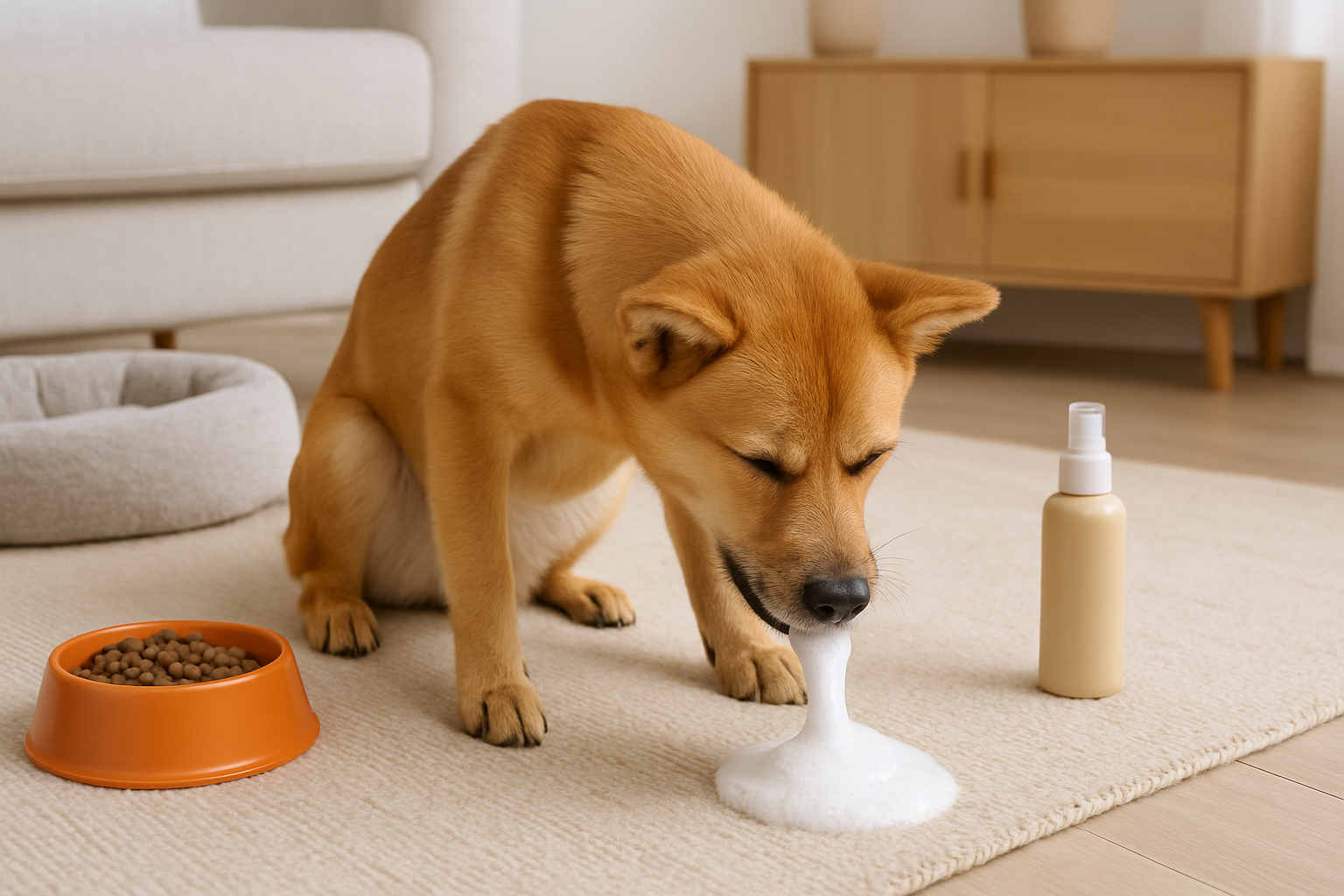
Foam when a dog vomits may contain stomach contents, saliva, or mucus, but its color alone cannot reveal the cause. Check whether your dog is vomiting or coughing, note whether it happens repeatedly and look for other symptoms. Contact a veterinarian when needed.
✅ 3 key takeaways
🔎
Foam alone cannot identify the cause
White or yellow foam can appear in different situations, so color alone is not enough to diagnose the problem.
🐕
Check whether it is vomiting or coughing
Noting whether your dog strained with its abdomen or brought up foam after coughing or retching can help your veterinarian.
🏥
Repeated episodes or urgent signs need veterinary attention
Contact a veterinary clinic without delay if your dog repeatedly retches without producing anything, has a swollen abdomen, or seems weak or unwell.
What does it mean when a dog vomits foam?
Foam may appear when saliva or mucus mixes with stomach contents during vomiting. It can also occur when stomach fluid comes up on an empty stomach or when food is regurgitated, but appearance alone cannot distinguish the cause.
Foam after coughing or retching may not be vomit. Observe what your dog did first, as well as the appearance of what came up.
What should you check first?
- What your dog did: Check whether your dog strained with the abdomen to vomit or brought it up after coughing or gagging.
- What came up: Note the foam’s color and amount, and whether it contains food, blood, or a foreign object. If possible, take a photo to show the veterinarian.
- Frequency and overall condition: Watch for further episodes, changes in appetite or energy, and whether your dog can drink water.
- Recent events: Consider whether your dog’s food or treats changed, or whether they may have eaten rubbish, a toy, medication, or another substance.
How to monitor your dog at home
Even if your dog seems normal after vomiting once, keep monitoring them. Do not force food or water. If vomiting continues or your dog vomits after drinking, it is safer to contact a veterinary clinic.
Do not give human medication or leftover veterinary medication unless a veterinarian tells you to. Recording when and how often your dog vomited, meals and treats, and anything unusual during walks can help the veterinarian assess the situation.
Changes that need prompt attention
Seek prompt veterinary care if you see blood with the foam, your dog is extremely lethargic or seems about to collapse, or they appear to be in pain. A suddenly swollen abdomen combined with repeated attempts to vomit that produce nothing may be an emergency; contact a veterinary clinic immediately.
Do not wait if your dog may have swallowed a toxic substance or a foreign object, or if vomiting keeps happening. Puppies, senior dogs, and dogs with existing health conditions may worsen, so contact a veterinarian sooner.
When should you contact a veterinarian?
If vomiting repeats or your dog seems different from usual, call a veterinary clinic to ask how soon they should be seen. If there are urgent warning signs or your dog may have eaten something harmful, seek help immediately rather than waiting to see whether more symptoms develop.
When you call, share when the vomiting started, how many times it happened, a photo of what came up, any other symptoms, and what your dog recently ate or may have swallowed. This information can help the veterinarian assess the cause and decide what to do next.
Frequently asked questions
Q. Does white foam mean my dog vomited on an empty stomach?
A. It may be related to an empty stomach, but white foam alone cannot confirm the cause. Also check whether it happens repeatedly and whether there are other signs, such as coughing or low energy.
Q. My dog vomited yellow foam. Is that okay?
A. Yellow foam may contain stomach contents or bile, but color alone cannot tell you whether your dog is safe. Contact a veterinary clinic if vomiting repeats or you notice other unusual signs.
Q. Can I give my dog water after they vomit?
A. Do not force your dog to drink; monitor their condition. If they vomit after drinking or cannot keep water down, contact a veterinary clinic for advice.
Q. Could it be a cough rather than vomiting foam?
A. Yes. Observe whether your dog strained with the abdomen or brought up foam after coughing or gagging, and describe this to the veterinarian. If you cannot tell the difference or the symptoms continue, veterinary care is recommended.
Sources
Rather than judging the cause by the foam’s color or appearance alone, check your dog’s behavior and overall condition. If the problem recurs or you see emergency warning signs, contact a veterinary clinic promptly.
This article provides general information for pet caregivers and does not replace veterinary diagnosis or treatment. Consult a veterinarian when symptoms appear.