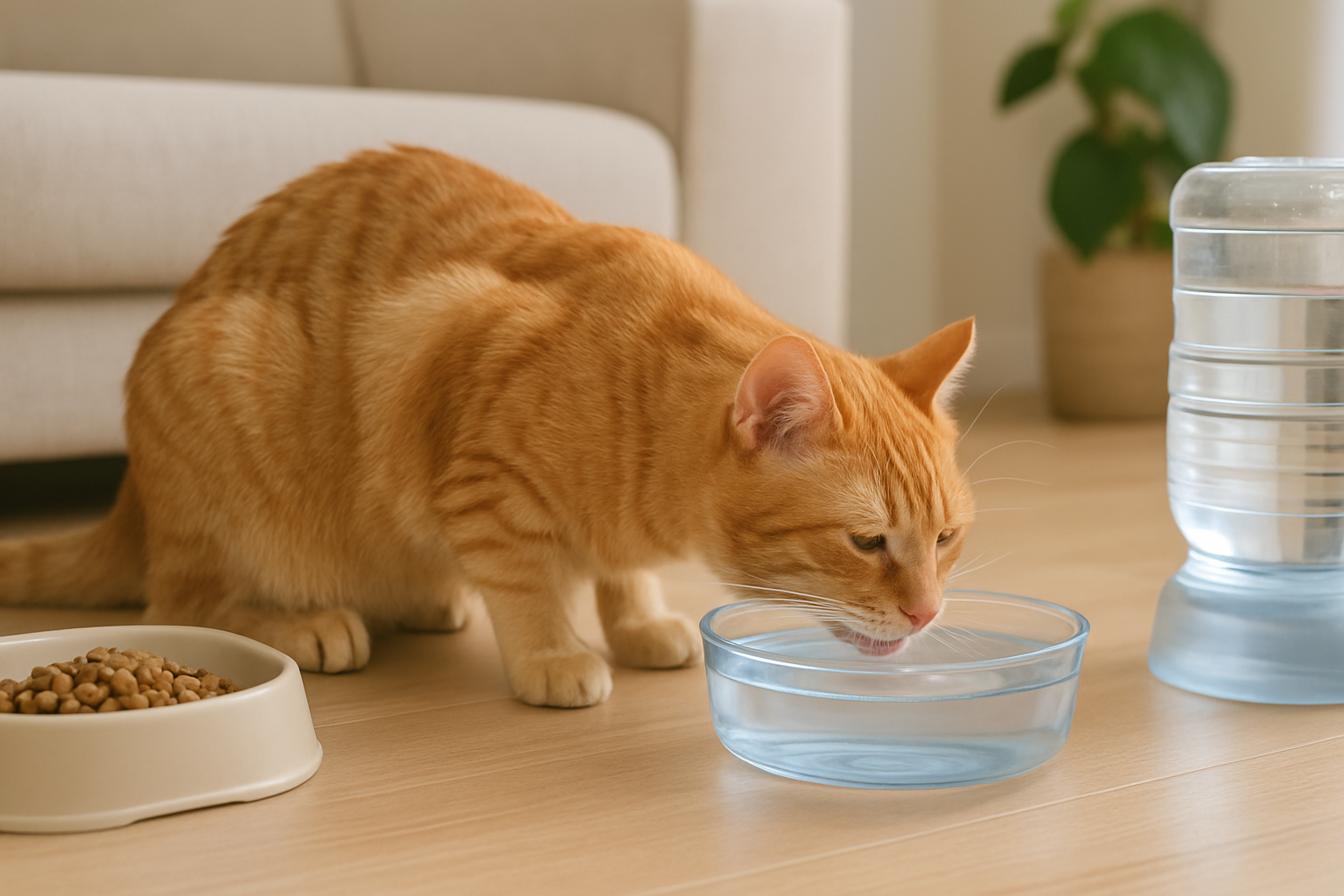
If your cat is drinking more often than usual, first check for changes to the water bowl and home environment. If the increase continues or you notice changes in urination, appetite, or weight, consult your veterinarian.
✅ 3 key takeaways
🔎
Compare with your cat’s usual habits
Consider recent changes—such as food, weather, or the water bowl’s location—alongside your cat’s drinking habits.
💧
Never restrict water
Do not remove the water bowl or limit your cat’s water because they are drinking more. Keep clean water available at all times.
🩺
Ask your vet if the change persists
Tell your veterinarian if increased drinking continues or you notice changes in urination, appetite, weight, or energy.
Basic Care Principles
How much a cat drinks can vary with several factors, including the moisture content of their food, activity level, and indoor temperature. Cats eating mostly dry food may appear to drink from the bowl more often than cats eating wet food.
Rather than comparing your cat with a fixed benchmark, focus on what is normal for them. If your cat keeps seeking water, do not assume that an environmental change is the only explanation; also watch for other changes in their condition. Chronic kidney disease and diabetes mellitus are among the conditions that may involve changes in thirst and urination, but drinking a lot by itself cannot identify the cause. You can also read the Cornell Feline Health Center’s guide to chronic kidney disease and its guide to diabetes mellitus.
What to Do, Step by Step
- Think about recent changes. Check whether you switched to dry food, the weather has become warmer, or you moved the water bowl or fountain.
- Observe drinking and urination. Along with how often your cat seeks water, keep an eye on the size and number of urine clumps and any changes in litter-box habits.
- Keep notes if you can. Accurate measurement may be difficult if other pets share the water or it is often spilled. Rather than trying to produce an exact figure, note the changes you observe and when they occur.
- Keep water available. Refresh it often and place it somewhere your cat can reach comfortably.
- Book a veterinary appointment if the change continues. Share your notes, the food your cat eats, and details of any medicines or supplements they take.
Common Mistakes to Avoid
- Restricting water: Do not remove the bowl or arbitrarily reduce the amount your cat can drink. This may increase the risk of dehydration instead of helping identify the cause of their thirst.
- Assuming there is only one cause: Warm weather or a change in food may play a role, but their presence does not rule out a health problem.
- Looking only at water-bowl intake: Wet food also contains moisture, and it can be difficult to tell how much each cat drinks when several cats share a bowl. Observe urination and overall condition as well.
- Trying to diagnose from drinking behavior alone: An examination and tests may be needed to find the cause. Avoid guessing at a condition or treatment.
When to Contact a Veterinary Professional
Contact your veterinarian if your cat’s drinking increases suddenly or the change from their usual pattern persists. It is also worth seeking advice if your cat urinates more often, their urine output changes, or you notice changes in weight or appetite, vomiting, or low energy.
If your cat repeatedly visits the litter box but cannot pass urine, or seems to strain when urinating, contact a veterinary clinic without delay. Being unable to urinate can be an emergency. It can help to tell the clinic when the signs began and how your cat’s drinking and urination habits have changed.
Tips for Ongoing Care
Wash the water bowl daily and refill it with fresh water. Notice whether your cat prefers a particular bowl or fountain, and keep checking that they drink well after you introduce a new product. If you have multiple cats, try to monitor each cat’s drinking and litter-box habits separately when possible.
Drinking and urination habits are useful details to share with your veterinarian during routine health checks. Learn what is normal for your cat, and note any noticeable changes so you can discuss them without delay.
Frequently asked questions
Q. Does a cat who drinks a lot always have a health problem?
A. Not necessarily. Food moisture, weather, and activity level can all affect drinking habits. However, if the change continues or comes with changes in urination, appetite, weight, or energy, consult your veterinarian to help determine the cause.
Q. Can I give less water to a cat who is drinking a lot?
A. No. Do not restrict water on your own; keep clean water available. It is difficult to determine the reason for increased drinking just by observing, so contact your veterinarian if the change persists.
Q. How can I keep track of my cat’s water intake?
A. You can note when you fill the bowl and how much remains, observe your cat drinking, and record changes in urination and litter-box use. In a multi-cat home or where water is often spilled, it may be hard to measure each cat’s intake accurately, so your observations are still useful.
Q. What should I do if my cat drinks a lot but cannot urinate normally?
A. If your cat repeatedly visits the litter box but cannot pass urine or seems to strain, contact a veterinary clinic immediately. Being unable to urinate can be an emergency.
Sources
Knowing your cat’s usual drinking habits can help you spot changes. Do not restrict water, and consult your veterinarian if a change persists or other signs appear.
This article provides general information for pet caregivers and does not replace veterinary diagnosis or treatment. Consult a veterinarian when symptoms appear.