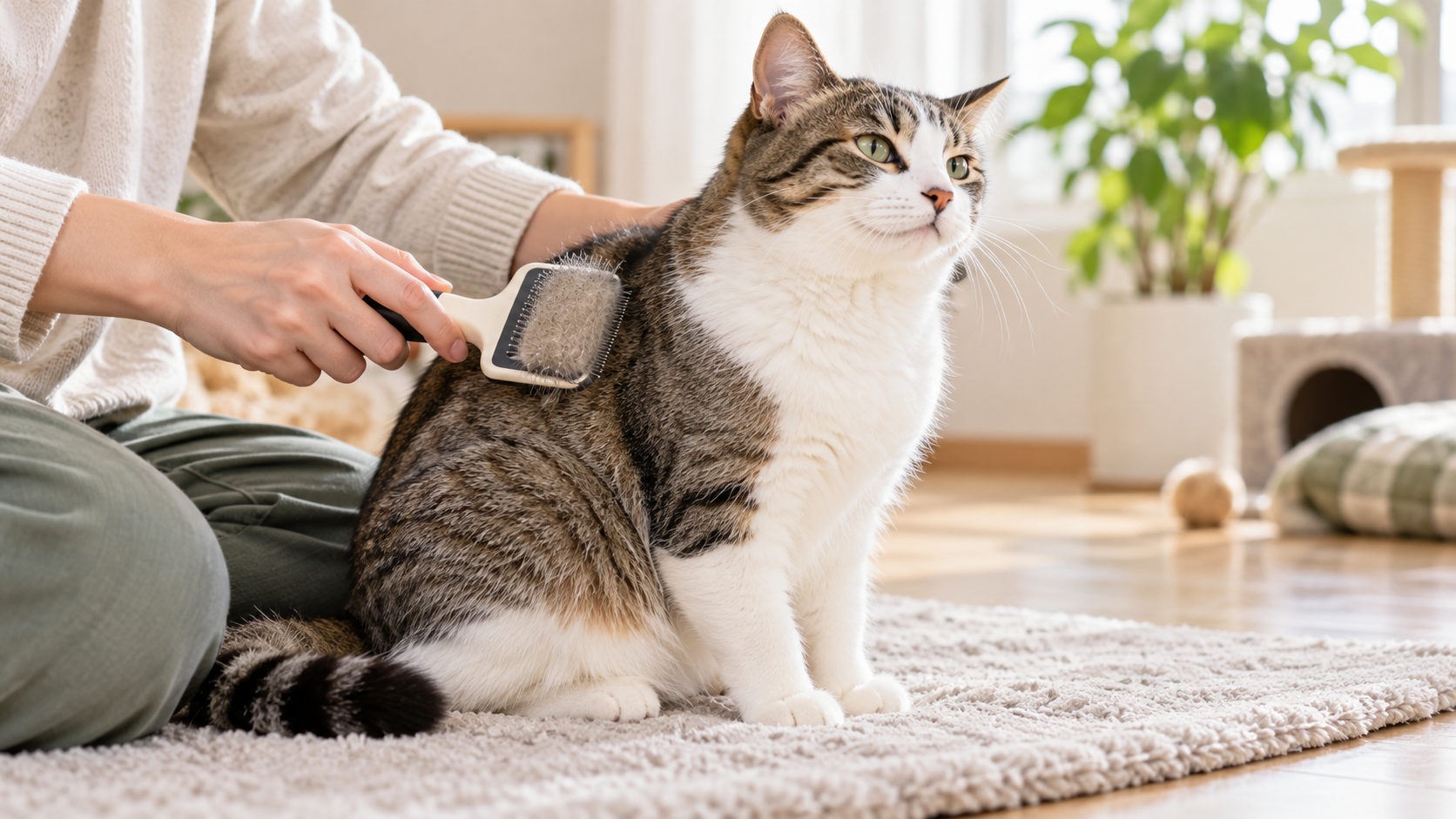
Some cat shedding is normal. Cats lose hair as part of their coat cycle and while grooming, and some indoor cats shed throughout the year. A sudden increase, bald areas, or itchy and inflamed skin deserves closer attention rather than being assumed to be ordinary shedding.
Common reasons cats shed
Seasonal changes may make shedding more noticeable, but the amount varies from cat to cat. Coat length and indoor or outdoor living alone cannot tell you whether a change is a health problem. Cats also swallow hair while grooming; an occasional hairball can happen, but repeated vomiting should not be dismissed as normal.
Overgrooming, fleas and other parasites, skin infections, and allergies can also contribute to hair loss or itchiness. These causes can look similar, so a veterinary exam may be needed to identify the reason.
How to care for your cat at home
- Brush gently and regularly. Choose a brush your cat tolerates and suit the routine to the coat. Avoid scraping the skin or pulling at mats.
- Keep track of changes. Note when shedding began, where it is happening, and whether you see itching, flakes, redness, appetite changes, or unusual behavior. Photos can help your veterinarian assess how the skin changes over time.
- Offer a complete, balanced diet and fresh water. Ask your veterinarian before adding supplements or changing foods to address shedding.
- Do not bathe routinely unless needed. Human shampoos and unapproved skin products may irritate a cat’s skin.
When to contact a veterinarian
Arrange a veterinary visit for bald patches, persistent scratching or licking, sores, scabs, discharge, or skin changes that are spreading or worsening. A reduced appetite, low energy, or weight change alongside hair loss also warrants advice. If your cat repeatedly vomits, retches without bringing anything up, or seems unwell, contact a veterinary clinic promptly.
If you also notice dark spots or irritation on the chin, see our guide to cat chin acne care. The right treatment for a skin problem depends on its cause.