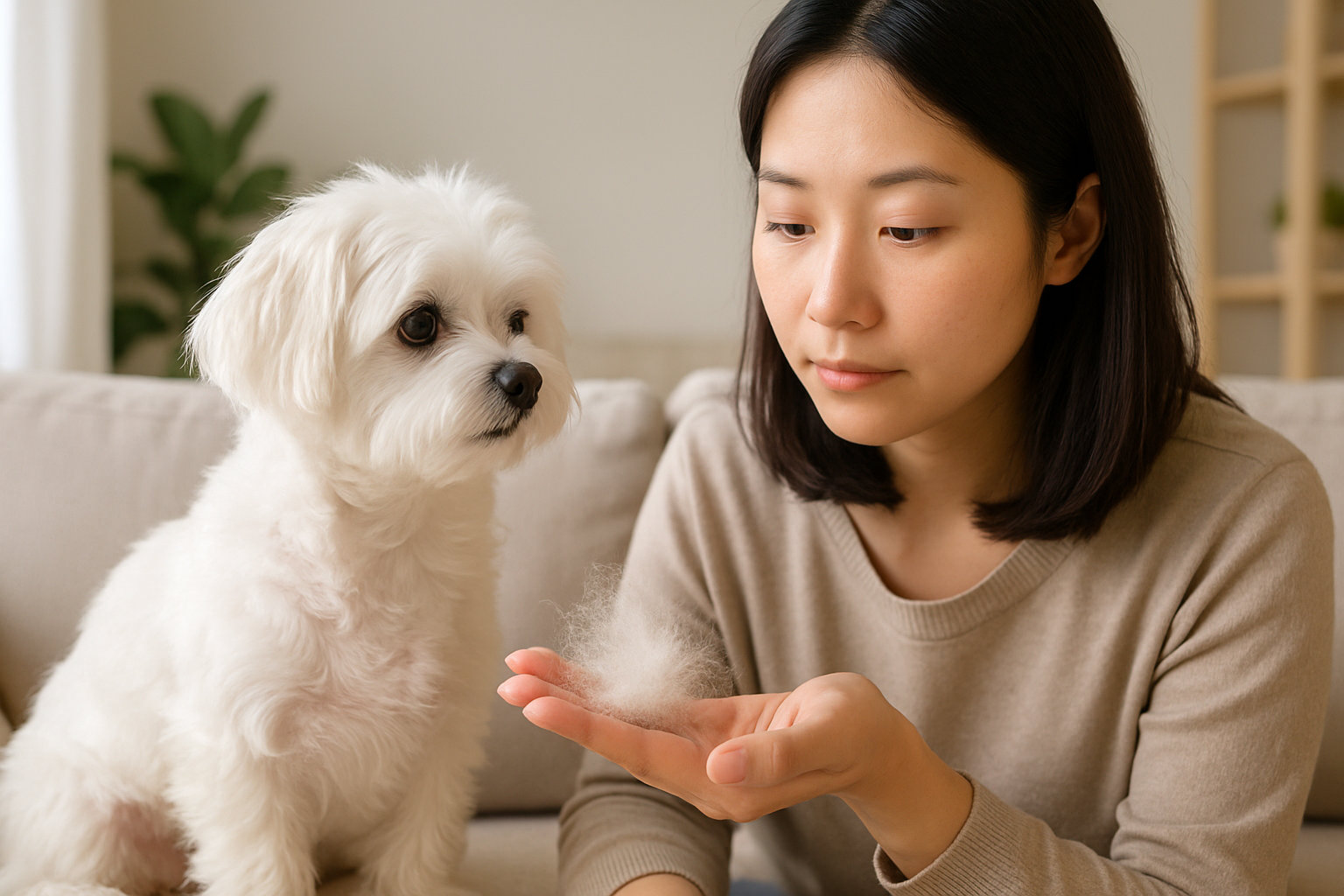
Maltese dogs are not usually heavy shedders, but noticeable hair loss or bare patches should prompt you to check both the skin and any recent changes in your dog’s routine. Hair loss alone cannot reveal the cause, so keep track of what you observe and consult a veterinarian when needed.
✅ 3 key takeaways
🔎
Everyday shedding and hair loss can look different
Distinguish a few loose hairs around the home from thinning patches or areas where the skin is exposed.
📝
Record skin symptoms and where hair is missing
Note when and where the hair loss began, along with itching, redness, flakes, or odor. These details can help your veterinarian.
🏥
Avoid guessing the cause or treating it yourself
Parasites, infections, allergies, and other issues can cause hair loss. Diagnosis and treatment should be guided by a veterinarian.
What Maltese hair loss can mean and common causes
Maltese dogs are known for shedding relatively little, but they do not shed no hair at all. It is useful to distinguish a small amount of loose hair from hair loss that leaves a noticeable bare patch or exposes the skin.
Hair loss in dogs can be associated with external parasites, bacterial or fungal infections, allergic skin disease, hormonal or other health problems, and repeated licking or scratching. Different causes can look similar, so do not assume a specific condition based on hair loss alone.
Changes to watch for early
Notice whether hair loss is in one spot or several, and whether it appears similarly on both sides of the body. Check for redness or thickening of the skin, scaling, scabs, discharge, or an unusual odor.
Increased scratching or licking, persistent chewing at the paws, and rubbing the body against the floor are also important changes. Observe whether the hairs look broken and short or have fallen out from the roots, so you can describe this at the appointment. If the affected area spreads quickly or there is pain, discharge, or another concerning symptom, contact a veterinarian without delay.
What to record at home and what to avoid
Write down when you first noticed the change and how it has progressed. Photos taken from the same distance and in similar lighting make it easier to compare over time. Also note any recent changes to food, treats, shampoo, laundry products, walking environments, parasite prevention, or medications and supplements.
Do not apply human ointments or shampoos, leftover medication, or essential oils to try to relieve itching or hair loss. Do not stop or change a prescribed medication without consulting your veterinarian. Avoid vigorous rubbing, shaving the coat aggressively, or frequent baths that may irritate the skin.
What to expect during a veterinary visit and tests
Your veterinarian will consider the pattern and location of the hair loss, the condition of the skin, the degree of itching, your dog’s environment, and its health history. Depending on the signs and examination, they may consider checking the skin surface or hair, testing for parasites or infection, or performing blood tests. The appropriate tests vary with the symptoms and examination findings.
Before the visit, bring your notes and photos, as well as a list of recently used products. Contact a veterinarian if the hair loss suddenly worsens or spreads, the skin develops wounds, discharge, or a strong odor, or itching seems to interfere with sleep or daily activities. Sudden, severe whole-body reactions, such as difficulty breathing or facial swelling, require immediate veterinary care.
How to help reduce recurrence and worsening
Check your dog’s skin and coat regularly. While brushing, look for wounds or red areas on the skin as well. Keep bathing and grooming appropriate for your dog’s skin condition, and follow your veterinarian’s guidance on parasite prevention and treatment.
Rather than making major dietary changes based on an assumption that a particular food or environment is responsible, record suspected changes and symptoms and discuss them with your veterinarian. If a cause is identified, follow the recommended care plan consistently and watch for a return of hair loss or itching.
Coat-care notes for Maltese dogs
A Maltese’s long coat can hide tangles or changes in the skin. When brushing, do not pull forcefully at knots; part the coat so you can inspect the skin. If the affected area is hard to see or the skin seems abnormal, have it checked by a veterinarian rather than trying to cover it up with grooming.
Frequently asked questions
Q. Does a little hair loss mean my Maltese needs to see a veterinarian?
A. Seeing a few loose hairs does not by itself mean there is a medical problem. However, contact a veterinarian if a particular area becomes bare, hair loss continues to increase, or signs such as itching, redness, or scaling appear.
Q. Is hair loss in Maltese dogs caused by allergies?
A. Allergies are one possible cause, but hair loss alone cannot establish that your dog has an allergy. Other causes, including parasites and infections, may also need to be considered, so consult a veterinarian for an evaluation.
Q. Can I apply human ointment to an area where my dog is losing hair?
A. It is best not to. The ingredients may not be suitable for dogs, and your dog could lick and swallow the product. Ask a veterinarian which treatment products, if any, are appropriate.
Q. What should I bring to a veterinary appointment?
A. Record when the hair loss began and how it has changed, any itching or skin changes, recently changed foods or products, and medications your dog is taking. Photos of the affected area can also help explain how it has progressed.
Sources
It can be difficult to identify the cause of hair loss in a Maltese by appearance alone. Keep a record of unusual changes and skin symptoms, and seek a veterinary evaluation if the hair loss is noticeable or getting worse.
This article provides general information for pet caregivers and does not replace veterinary diagnosis or treatment. Consult a veterinarian when symptoms appear.